Global trade flows in transition
An overview of the most important free trade agreements and what they mean for purchasing and supply chains.
 Free trade agreements can significantly change procurement costs and routes – anyone managing global supply chains needs to know the relevant agreements
- The increasing politicization of trade issues requires active monitoring: tariffs, rules of origin and new agreements can change quickly and unpredictably
- Bundling indirect requirements through a central partner not only reduces operational effort but also simplifies customs and compliance requirements in international procurement
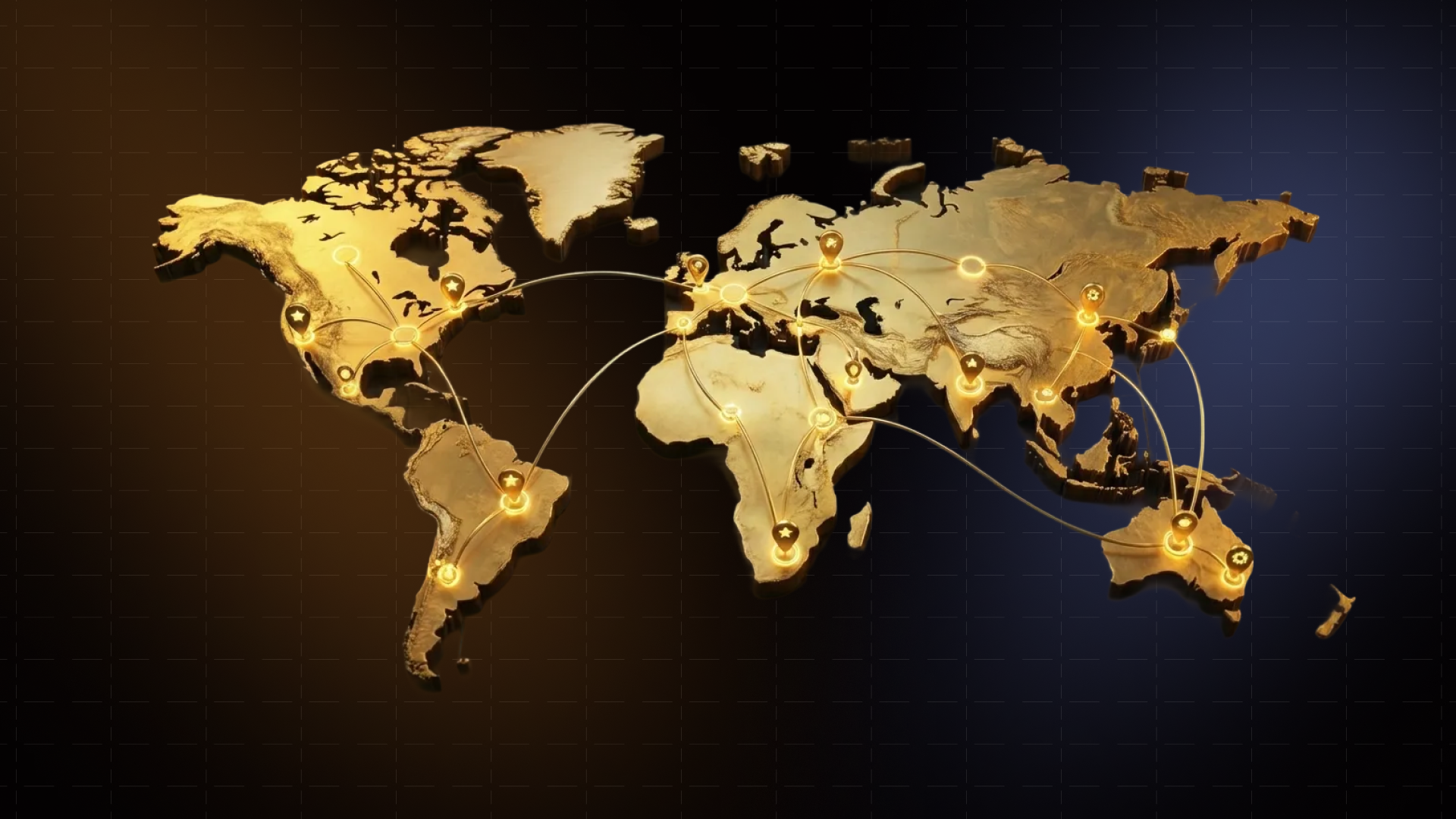
Free trade agreements are one of the strongest levers for international procurement. They lower tariffs, simplify bureaucracy and open markets. At the same time, they are becoming more politically complex and strategically important for companies. Whether purchasing, logistics or management, anyone who manages global supply chains should know which agreements are really relevant and where the pitfalls lie. This overview lists the most important free trade agreements with a focus on effects on purchasing and supply chain.
Why free trade agreements are crucial for purchasing
Free trade agreements have a direct effect on the cost structure and ability of companies to deliver. They create advantages by eliminating or reducing import and export duties and stable framework conditions for long-term supplier relationships facilitate access to new markets and promote competition. At the same time, the rules of origin must be correctly applied, because this is the only way to realize the financial benefits.
Overview of central free trade rooms
European single market and EEA
The European Union is one of the largest free trade zones in the world. There are no customs duties within the internal market, but there are uniform rules on product standards, safety and approval. The market is complemented by the European Economic Area with Norway, Iceland and Liechtenstein, which is particularly important for industry, energy and raw materials. For purchasing, this means low transaction costs, high regulatory stability and ideal conditions for strategic supplier relationships.
EU agreements with Canada Japan and South Korea
With countries such as Canada and Japan, the EU has concluded modern agreements that not only reduce tariffs but also reduce technical trade barriers. Industrial goods are often completely duty-free, which makes it easier to approve products and opens up new procurement alternatives to China.
EU and Mercosur
The agreement between the EU and Mercosur promises significant tariff reductions, for example for machinery, vehicles and chemical products. At the same time, there are long transition periods and political debates on environmental and agricultural issues. For buyers, this means cheaper procurement of raw materials in the long term, new supplier options in South America, combined with growing uncertainty due to political processes.
North America USMCA
In North America, USMCA regulates trade between the USA, Canada and Mexico. It is relevant for European companies if parts of the supply chain are located there. Stricter rules of origin as well as labor and environmental requirements are influencing production sites. At the same time, opportunities arise for nearshoring strategies.
Asia Pacific RCEP and ASEAN
With RCEP, Asia has created the largest free trade zone in the world. ASEAN has been the economic backbone of Southeast Asia for decades. Uniform rules of origin facilitate regional supply chains and create advantages for electronics, components and precursors. At the same time, competitive pressure is increasing for European providers.
What free trade agreements do not automatically solve
Despite tariff reductions, many hurdles remain. Non-tariff trade barriers such as approvals, standards and certificates must be observed. Bureaucracy through proofs of origin persists, and political risks such as sanctions, export controls or trade conflicts can put a strain on supply chains. Companies should therefore see free trade agreements as a building block and not as a panacea.
1-creditor model in international purchasing
Processing is becoming complex, especially when it comes to global supply chains with several countries of origin. Pedlar's 1 creditor model can provide strategic advantages here. Fewer suppliers in accounting lead to clearer responsibilities for customs and documentation and improve the negotiating position through bundling. A typical application is a central trading partner that bundles goods from various free trade zones and handles customs processing, so that purchasing benefits from economies of scale and reduced complexity.
Recommendations for action for companies
Companies should actively use agreements as many tariff advantages remain unused. Supply chains should be rethought to enable nearshoring and dual sourcing. Customs and trade knowledge must be anchored in purchasing, as free trade agreements are not just a customs issue but part of the purchasing strategy. Partners should also be strategically selected to save internal resources.
Read the original article here
Would you like to talk about how many suppliers your customs and documentation work is currently spread across? Schedule a call →